
Landscaping for Wet Yards in Bedford, OH
Why Your Yard Stays Wet and How Landscaping Can Help

Standing water transforms a beautiful lawn into a soggy, unusable swamp. If you walk across your grass and hear a squelching sound days after the rain stops, you are not alone. Constant wetness kills turfgrass, creates breeding grounds for mosquitoes, and can even threaten your home’s foundation.
Most homeowners try temporary fixes like tossing down extra grass seed or digging a random trench, only to watch the water pool up again during the next heavy storm. A soggy lawn is rarely just a rain issue—it is almost always an underlying drainage and soil issue.
Fortunately, targeted yard improvements can restore your property. By combining proper grading, strategic planting, and functional exterior features, you can redirect excess water and enjoy a firm, healthy lawn year-round here in Bedford, OH.
The Core Causes of Standing Water in Your Lawn
Before jumping into solutions, you need to understand why water gathers in your yard instead of soaking into the ground. Excess water usually stems from a mix of local soil composition, flat topography, and improper runoff management.
Poor Soil Absorption and Compaction
Heavy clay soil is notoriously slow to absorb water. Rain sits on top of compacted clay rather than draining deep into the earth. Heavy foot traffic, lawn equipment, and seasonal freezing and thawing pack the soil down even tighter, creating an impenetrable barrier.
Inadequate Slope and Grading
If your property lacks a subtle slope away from your living areas, gravity works against you. Low spots naturally collect water from higher areas of the property. Without a clear path to follow, that water stagnates until it slowly evaporates.
Roof Runoff and Irrigation Problems
Uncontrolled water from roof gutters often dumps hundreds of gallons directly onto localized spots in your yard during a single rainstorm. Combined with misdirected irrigation problems, your lawn simply receives more water than the ground can handle at one time.
Strategic Landscaping Solutions for Wet Yards
Fixing a soggy property requires more than just digging a ditch; it takes an integrated plan that blends nature with engineering. Professional landscape installation addresses both the cosmetic appearance and the structural drainage of your site.
Soil Aeration and Composition Upgrades
Breaking up compacted soil allows trapped water to percolate downward. Amending heavy clay with organic matter improves soil structure over time, creating a sponge-like environment that absorbs moisture while keeping plant roots healthy.
Swales and Rain Gardens
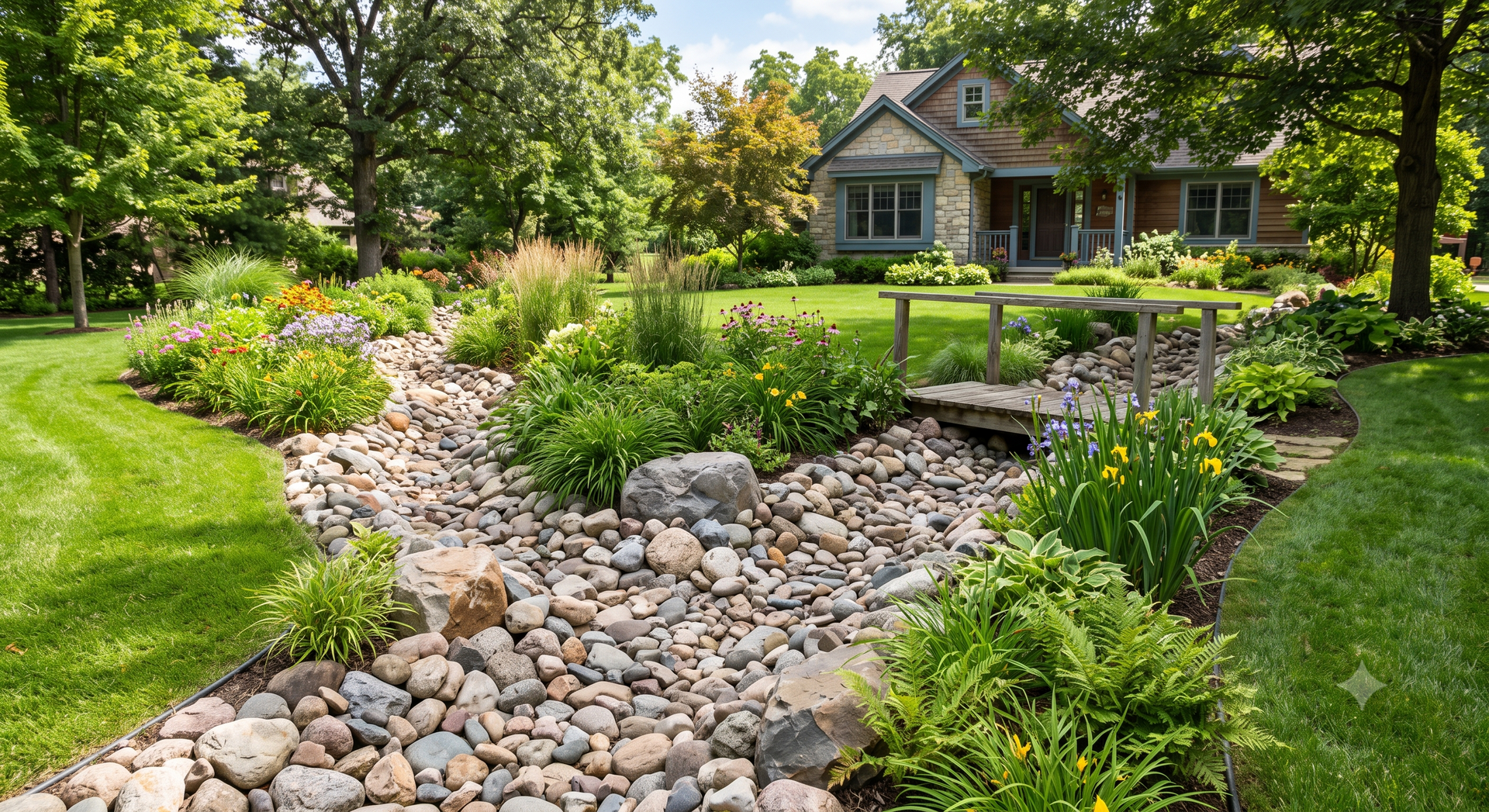
A dry creek bed or gentle swale acts as a natural stream channel, catching surface runoff and directing it toward safer areas. Planting water-loving native shrubs and perennials within a designated rain garden creates a beautiful focal point that actively drinks up excess water.
Smart Plant Selection
Trees, shrubs, and deep-rooted native plants pull massive amounts of water out of the soil through natural transpiration. Investing in proper tree and shrubbery planting in low areas helps naturally lower the water table while adding privacy and curb appeal.
Combining Hardscaping with Drainage Infrastructure
When plants alone cannot handle the volume of water, structural solutions offer a permanent fix. Modern hardscaping features can be designed specifically to manage heavy water flow without sacrificing aesthetic appeal.
Permeable Pavers and Channels

Traditional solid concrete surfaces trap water and force it onto nearby grass. Installing permeable paver pathways allows rainwater to seep through the joints into an underground stone reservoir, preventing puddles from forming on high-traffic walkways.
Subsurface Water Redirects
French drains, catch basins, and underground downspout extensions intercept surface water before it creates a mess. These systems capture runoff at the source and carry it safely to a designated discharge area far away from your home.
Addressing Soggy Lawns in Bedford, OH
Properties throughout Bedford, OH frequently contend with dense clay soils and drastic weather swings. From heavy spring rains to rapid winter snowmelts, local lawns endure significant water stress throughout the year. Homes built on flat lots or near natural slopes are particularly vulnerable to lingering mud and pooling water. Implementing solutions tailored to local soil conditions ensures your property stays dry through every season.
Get a Custom Landscaping Plan for Your Property
You do not have to settle for a soggy, muddy lawn every time it rains. Eli's Landscape & Design Inc. provides tailored drainage and property improvements designed to eliminate standing water for good. Call our team today at 440-248-9787 to request an evaluation for landscaping solutions that protect your property and restore your outdoor space.

Frequently Asked Questions
Can landscaping really fix a flooded yard?
Yes, professional landscaping addresses the root causes of standing water by reshaping your terrain, improving soil drainage, and introducing plants that absorb high volumes of water. Combining these natural solutions with subsurface drainage systems provides a long-term solution for flooded lawns.
What is the fastest way to get rid of standing water in a lawn?
The fastest way to eliminate standing water is installing a subsurface drainage system, such as a catch basin or French drain, combined with proper regrading. These systems immediately intercept excess water and direct it away from problem areas before it can pool.
Will a French drain ruin my existing lawn?
While installing a French drain requires temporary trenching, professional installers carefully cut and replace turf so your grass recovers quickly. Once completed, the drain remains hidden underground while keeping your lawn dry and healthy.
Which plants absorb the most water in a wet yard?
Native trees, moisture-tolerant shrubs, and deep-rooted perennial grasses excel at absorbing ground moisture. Species like river birch, red maple, dogwood, and various native ferns thrive in damp conditions and actively help pump water out of the soil.
A wet yard limits how you enjoy your outdoor space and risks long-term damage to your home’s exterior. With the right combination of grading, plant selection, and drainage infrastructure, you can turn a swampy yard into a functional, beautiful landscape. Contact Eli's Landscape & Design Inc. today to get started on your custom lawn evaluation.